Walking Alongside Grief
Voices from the High Peaks Hospice Bereavement Team & Volunteers
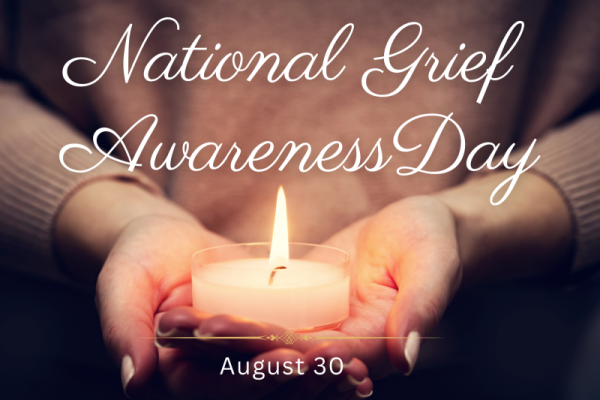
National Grief Awareness Day — August 30
Grief is something we will all experience, yet it can be difficult to understand—both for the person grieving and for the people who want to support them.
National Grief Awareness Day, observed on August 30, raises awareness about the grieving process and the value of connection, counseling, and bereavement support.
At High Peaks Hospice, our bereavement professionals and volunteers have the privilege of walking alongside individuals and families as they navigate life after loss. We asked them to share what drew them to this work, what they wish more people understood about grief, and the experiences that have stayed with them.
Their responses offer different perspectives, but a common message emerges: there is no single way to grieve, and no one should have to navigate grief alone.

Meet Our Bereavement Team
Laura Brown 
Hospice Services Specialist
What drew you to bereavement work and what keeps you passionate about supporting people through grief?
“I feel that it is a privilege and I am humbled every time I can offer love or insight to someone when they are hurting. Sharing in someone else’s pain has to be the simplest way to change the world and I am so grateful to be able to be a part of it.”
What is one thing you wish more people understood about grief and the grieving process?
“Grieving is as natural as breathing and just as good for you.”
What is one experience or part of your work with a grieving individual or family that has stayed with you?
“I remember one older woman told me in a very matter-of-fact and cheerful tone, ‘I grieve because it’s necessary and I keep on going because this is what God has asked of me.’ She was lighthearted in her quiet strength and I smile just thinking of her!”
Marissa Walkup
Bereavement Counselor
What drew you to bereavement work and what keeps you passionate about supporting people through grief?
“I was drawn to bereavement because I wanted to learn how to properly support my friends, family and community with one of the hardest experiences people have to go through. Grieving feels profoundly isolating and I appreciate being a safe, open place for them to be able to speak about their experiences.”
What is one thing you wish more people understood about grief and the grieving process?
“I wish more people understood that healing through grief does not mean forgetting or moving on from the person you lost. It’s important to hold onto the love, memories and continue the bonds we had with our loved ones. Whether that be sharing stories or how we pick out our produce. We are learning how to carry them with us in different ways and finding meaning to our new reality.”
What is something else you would like to share with the community about your work?
“Support is out there! Experiencing the loss of a loved one already feels impossible to bear, you don’t have to go through it alone.”
Tracy Mason
Bereavement Coordinator
What drew you to bereavement work and what keeps you passionate about supporting people through grief?
“I was drawn to the Bereavement Department as I wanted to ensure those that are grieving that they did not have to navigate their darkest moments alone. It is an honor to walk alongside someone as they rebuild their lives around their loss.”
What is one thing you wish more people understood about grief and the grieving process?
“That grief is not a linear process with an end date, but an ongoing journey of integration.”
What is something else you would like to share with the community about your work?
“I would like people to know that seeking help is a sign of immense strength, not a failure to cope. That Bereavement support is for anyone experiencing a loss, not just immediate family members.”
Voices From Our Bereavement Volunteers
Our bereavement volunteers bring another important perspective. They give their time to listen, share experiences, offer encouragement, and simply be present with people navigating grief.
Their experiences remind us that supporting someone through grief can also be a journey of learning, connection, and personal growth.
Sam Brayton
Bereavement Volunteer
What do you enjoy most about supporting the High Peaks Hospice Bereavement Team?
“I like the way the bereavement team members approach the grief with sensitivity, compassion, and kindness—always listening and caring.”
What have you learned from the people you’ve had the opportunity to support through grief?
“It is easy to see the bravery they exhibit as they face very difficult emotions in a group setting, being vulnerable at a time when some people would choose to hide from others. It reinforces my belief that I can do hard things because I see them doing hard things.”
What is one thing you wish more people understood about grief and the grieving process?
“From the outside, I wish more people understood what they can say or do that would be helpful for the person who is facing grief. From the inside, I love to learn about the various ways that people can, and do, face grief. I want to keep learning so I have some of the tools that can help others feel loved and supported through the hard times.”
And Sam leaves us with a beautiful reminder:
“We are walking each other home.”
Rick Bergeron
Bereavement Volunteer
Rick’s journey into bereavement support began about a year after he became a High Peaks Hospice volunteer.
“My bereavement support journey began a year after I became a Hospice volunteer. Marie Petrie asked me to speak at a bereavement gathering in Port Henry and I have been actively involved in bereavement support since then.”
What do you enjoy about supporting people through grief?
“I enjoy just being present to those going through the grieving process and sharing all the information that I have read & accumulated regarding the grieving process. Also sharing my own grief experiences and offering hope to those who are grieving the loss of a loved one.”
Rick has also learned that the impact of supporting someone through grief can go both ways.
“As a volunteer for High Peaks Hospice, I always share that you never know the impact that you can have on someone’s journey, either at the end-of-life or during the grieving process. In addition, you never know what impact individuals will have on our own journey.”
What is one thing you wish more people understood about grief and the grieving process?
Rick shared two lessons that have become especially important to him:
“Grief is not a problem that can be fixed. It is part of the healing process that must be soothed a little at a time.”
“The grief process is as unique as each individual is unique. There is no right or wrong way to grieve.”
Grief Doesn’t Have a Timeline
The experiences shared by our bereavement team and volunteers remind us that grief is not something to “get over.” It is a deeply personal process that can change over time.
There is no single way to grieve. There is no timeline that tells us when we should be finished grieving. And seeking support does not mean we are failing to cope.
Sometimes support means having someone listen.
Sometimes it means sharing a memory.
Sometimes it means finding a new way to carry the relationship with someone we’ve lost.
And sometimes, it simply means having someone willing to sit beside us.
You Don’t Have to Grieve Alone
This National Grief Awareness Day, we invite our community to remember that grief is not something to “get over.” It is something we learn to carry, integrate, and live with—and connection can make that journey a little less lonely.
If you or someone you know is grieving, support is available from the High Peaks Hospice Bereavement Team regardless of whether or not hospice was utilized.
|



 Marissa Walkup
 Sam Brayton
 Rick Bergeron